

Refrigeration equipment for cold rooms
Monoblock & split units. For cold rooms.
Monoblock and split units for chilled cold rooms and freezer rooms. Compare published room volumes in m³, understand the installation options and buy your selected model at HVAC Spare Parts.
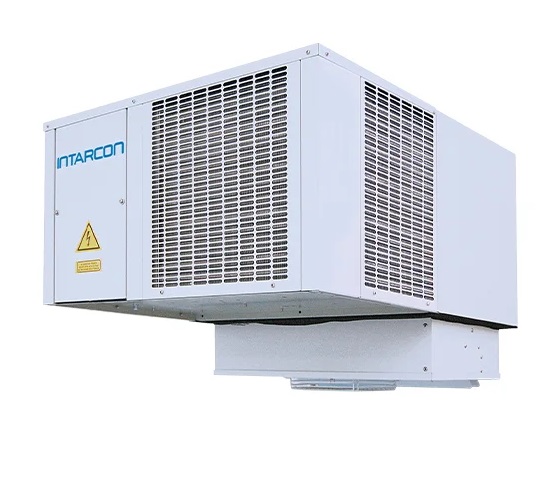
MONOBLOCK / INTARCON
Chilled storageMCV-LD-0009A
5 m³Published volume
01 Monoblock & Split02 Chilled storage & Frozen storage03 Published volume · m³04 HVAC Spare Parts →
Refrigeration equipment
Find your refrigeration unit
Start with your application and installation type.




No refrigeration units match these filters
Try a different combination or reset the filters to see this selection.
Prices read from HVAC Spare Parts and updated manually. Options selected in the store may change the final amount.
Indicative volume under the manufacturer’s selection conditions. Volume alone does not replace a heat load calculation.
Selection criteria
Monoblock and split units by application
Compare monoblock and split units within the application you need. Published m³ provide an initial shortlist, to be checked against the actual cold room conditions.
Monoblock units for chilled cold rooms
Compare cold room monoblock units by published m³, mounting and specifications, then review and order the model at HVAC Spare Parts.
Explore selection →Monoblock units for freezer rooms
Freezer monoblock units with published m³ and prices. Compare mounting, supply and selection conditions before choosing the exact model.
Explore selection →Split refrigeration units for cold rooms
Find cold room split units and compare published volume, electrical supply and specifications before ordering at HVAC Spare Parts.
Explore selection →Split units for freezer rooms
Compare freezer split units by published m³ and verified specifications, then confirm options and order the exact model at HVAC Spare Parts.
Explore selection →Monoblock or split
Two configurations. One informed choice.
The difference is how the components are arranged and where heat is rejected.
Monoblock
The compressor, condenser and evaporator form one compact assembly, with the indoor and outdoor sections separated by the cold room wall or ceiling.
- Compact wall or ceiling assembly
- Follow ventilation and mounting requirements
- Check panel thickness and openings
Split
The condensing unit and evaporator are separate, connected by refrigerant piping. Heat rejection can be located away from the cold room.
- More flexibility in positioning
- Refrigerant connections between refrigeration units
- Check pipe runs, height differences and supply
Choosing a refrigeration unit
Volume is the start.
Conditions make the choice.
Two cold rooms with the same volume may need different refrigeration units. Check these four factors before choosing.
Operating temperature
Chilled storage and frozen storage are different duties. Use the application stated for the exact model.
Insulation and ambient
Panel thickness and condition, outdoor temperature and condenser ventilation affect the load and performance.
Products and door openings
Product quantity, incoming temperature and door opening frequency change the cooling demand.
Installation and power
Check voltage, frequency, condensate drainage and service clearance. For a split unit, also check the refrigerant piping.
Calculate internal volume
Enter the usable internal dimensions of your cold room. This filters the catalogue; it does not size the refrigeration capacity.
AACORE SUPPLY
Guides to choosing cold room units
Understand mounting, room volume, temperature and operation before selecting a model.
Monoblock units for cold rooms
How wall and ceiling monoblock units work, what to compare and how to select refrigeration equipment for chilled or frozen storage.
Read guide →How split refrigeration units work in cold rooms
Separate condensing units and evaporators: layout, installation considerations and selection for chilled or frozen storage.
Read guide →Refrigeration units for chilled storage
Choose a monoblock or split for chilled storage using internal volume, operating temperature, insulation and room usage.
Read guide →Refrigeration units for frozen storage
Monoblock and split units for maintaining frozen goods: volume, low-temperature duty and selection considerations.
Read guide →How to calculate cold room volume
Calculate internal cubic metres and understand the difference between room volume, airflow and refrigeration capacity.
Read guide →How to choose a cold room refrigeration unit
A practical comparison of application, volume, installation, power supply and model documentation.
Read guide →Monoblock vs split units: choosing cold room equipment
Compare monoblock and split units by layout, ventilation, refrigerant pipework, access and cold room duty before selecting a model.
Read guide →Wall-mounted or ceiling monoblock for a cold room
What to check when choosing a wall or ceiling monoblock: panels, openings, airflow, drainage and maintenance access.
Read guide →Refrigeration capacity and cold room volume in m³
Why cold room volume does not convert directly to kW, and which heat loads matter when selecting monoblock and split units.
Read guide →Condenser ventilation for monoblock and split units
Understand heat rejection when locating a monoblock or the condensing unit of a split cold room system.
Read guide →Defrost in freezer room refrigeration units
Understand frost formation, airflow and water removal when choosing refrigeration equipment to maintain frozen products in a freezer room.
Read guide →Comparing refrigerants in cold room units
What to check about the refrigerant in a monoblock or split unit, and why the gas alone does not determine room capacity.
Read guide →Electrical supply for cold room refrigeration units
Voltage, phases, frequency and current: what to check before buying a monoblock or split refrigeration unit.
Read guide →Maintenance and performance of cold room units
Air, ice, doors, controls and operating duty: points to examine when understanding a loss of cold room performance.
Read guide →FAQ
Frequently asked questions about monoblock and split units
Which monoblock and split units should I choose for chilled or frozen storage?
Monoblock and split units for chilled storage and frozen storage are selected for different operating temperatures. Compare each model’s published conditions: the same cold room volume does not make two refrigeration units interchangeable.
Can I choose monoblock and split units by cold room volume alone?
No. Cold room volume in m³ helps you compare monoblock and split units, but you must also check room and ambient temperatures, insulation, stored products, door openings and the manufacturer’s selection conditions.
Do monoblock and split units require professional installation?
Yes. Monoblock and split units have different layouts: a monoblock combines the refrigeration circuit in one assembly, while a split unit separates the condensing unit and evaporator. Mounting, power supply, condensate drainage and ventilation must follow the manufacturer’s instructions. Professional installation requirements depend on the model and the work involved.
Where can I buy INTARCON and KIDE monoblock and split units?
Each product page for monoblock and split units identifies the manufacturer and model reference, with a link to the exact product at HVAC Spare Parts. There you can check the final price, options and applicable taxes before ordering your INTARCON or KIDE refrigeration unit.
Is the cold room volume of monoblock and split units the same as airflow?
No. For monoblock and split units, cold room volume is expressed in m³ and is the published volume used for refrigeration equipment selection. Fan airflow is expressed in m³/h and measures a different quantity. Airflow must not be used as the cold room capacity.